History Painting

History Painting

Traditionally the most-respected of all the genres, "history painting" is not limited to pictures depicting 'historical scenes'. The term derives from the Italian word "istoria", meaning narrative (story), and refers to paintings showing the exemplary deeds and struggles of moral figures. It includes Christian imagery involving Biblical figures, as well as mythological painting involving mythical or pagan divinities, and real-life historical figures. History paintings - traditionally large-scale public works - aim to elevate the morals of the community.

More Details

Reference that may help:


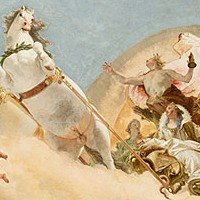
Apollo's chariot in the centre
of the ceiling above the Grand
Stairwell at Wurzburg.
By Tiepolo.
Regarded as one of the
greatest paintings of
the eighteenth century
Venetian School.

Wurzburg Residence Frescoes (1750-53)
'Allegory of the Planets and Continents' above the Treppenhaus

Description

Name: Wurzburg Residenz Frescoes (1750-53)
Artist: Giambattista Tiepolo (1696-1770)
Medium: Fresco painting
Genre: History painting
Location: Treppenhaus/ Kaiserhaal, Wurzburg Palace


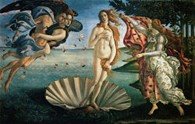
Birth of Venus by Botticelli
The Birth of Venus
By Botticelli.
One of the finest works
of the Italian Renaissance.

Birth of Venus (1484-6)

Description

ArtistSandro Botticelli (1445-1510)
MediumTempera on canvas
Genre: Mythological history painting
LocationUffizi Gallery, Florence.


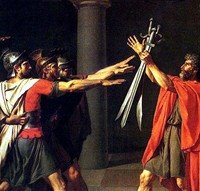
Oath of the Horatii (detail)
By Jacques-Louis David.
Considered to be one of the
Greatest Paintings Ever.

The Oath of the Horatii (1785)


Description

Name: The Oath of the Horatii (1785) (Le Serment des Horaces)
Artist: Jacques-Louis David (1748-1825)
Medium: Oil painting on canvas
Genre: Mythological painting
Location: Louvre Museum, Paris